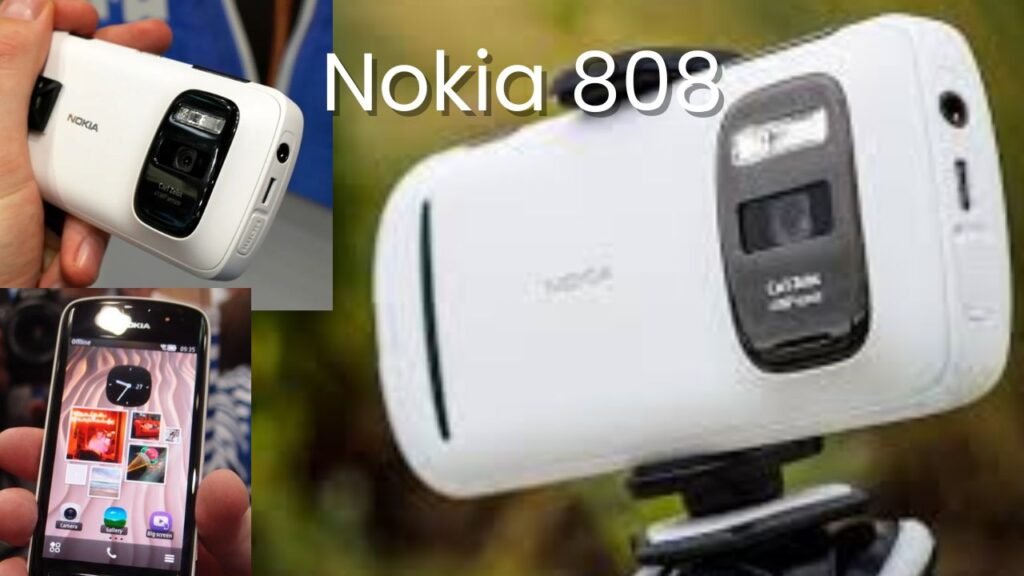
If you’ve grown up in India during the early smartphone days, chances are you’ve either used a Nokia phone or desperately wanted one. From the rugged 1100 to the stylish N-series, Nokia wasn’t just a brand — it was emotion. And among all those iconic models, one phone still shines like a legend — the Nokia 808 PureView. The phone that stunned everyone back in 2012 with its 41-megapixel camera. Yes, 41MP — even before most of us knew what megapixels actually meant.
I still remember the day Nokia announced it. The excitement in the tech world was unreal. Back then, we didn’t have today’s fancy “AI-enhanced ultra night portrait” marketing. Nokia simply dropped a phone that could shoot photos sharper than many digital cameras of its time. Let’s dive into what made this phone so special, and why even after 10 years, it still earns respect from tech lovers like me.
A Phone That Redefined Mobile Cameras
Back in 2012, smartphone photography wasn’t what it is today. Most phones had basic 5 or 8MP sensors, and taking a clear picture in low light felt like a miracle. Then came the Nokia 808 PureView, with its massive 41MP sensor — an unheard-of number even for many compact cameras.
But it wasn’t just about megapixels. Nokia had built something genuinely smart. The phone used what they called PureView technology, which combined several pixels into one to create super-sharp, low-noise photos. So even when you shot at 5MP or 8MP, you were getting all the clarity and detail of a 41MP image. It was revolutionary.
The lens was co-engineered with Carl Zeiss, a name that instantly meant quality in optics. The phone had real lossless zoom, something that most phones today still struggle to achieve properly. No grainy zoomed-in shots — it was optical-quality zoom through pure sensor power.
Design That Felt Ahead of Its Time
Let’s talk about the design. If you’ve ever held a Nokia 808, you’ll know what I mean when I say it felt solid. Built with unibody polycarbonate, it was sturdy yet classy. There was no cheap plastic feel. The back had a distinctive camera bump — yes, before bumps became trendy — because it housed serious hardware, including a large sensor and xenon flash (a real flash, not just an LED).
It came with a 4.5-inch AMOLED display covered by Gorilla Glass 3, which was premium back then. And despite its somewhat chunky look by today’s standards, it had a proper “camera-like” grip. Nokia even sold an optional camera grip accessory with an extra battery — making it feel like a pocket DSLR.
A Quick Look at Its Core Specs
Here’s a small table summarizing the key specs that made Nokia 808 stand out:
| Feature | Specification |
| Display | 4.5-inch AMOLED (ClearBlack) |
| Processor | 1.3 GHz ARM11 single-core |
| RAM | 512 MB |
| Storage (ROM) | 16 GB internal + expandable up to 32 GB |
| Camera (Rear) | 41 MP with Carl Zeiss optics, Xenon flash |
| Camera (Front) | VGA |
| Battery | 1400 mAh removable |
| Operating System | Symbian Belle OS |
| Video Recording | Full HD 1080p |
| Body Material | Polycarbonate unibody |
| Special Feature | PureView oversampling, ND filter, lossless zoom |
Looking at these specs now, they might seem basic compared to the octa-core, 12GB RAM beasts we have today. But in its time, this phone was pure innovation.
A Software That Deserved Better Hardware
The only thing that held back the Nokia 808 was its software — Symbian Belle. It was a little outdated and slow compared to Android, which was taking over the world back then. Still, the operating system had a charm of its own. The live tiles, clean menus, and simple layout made it feel personal. It just lacked the app ecosystem to keep it alive.
I remember using it for photography more than anything else. The camera app had manual controls for ISO, white balance, and shutter speed — something only “Pro” modes of 2025 phones are now offering again. You could half-press the dedicated camera button to focus and then click fully to capture, just like a real camera. For photography lovers, it was a treat.
Performance and Longevity
Now, let’s be honest. The 808 wasn’t meant for gaming or multitasking. It had a modest processor and 512 MB of RAM. But the optimization was so good that it ran smoothly for years. What’s even more impressive is that many people — including me — still have a working Nokia 808 that boots up just fine even after a decade. That’s Nokia quality for you.
Battery life was decent for the time. With moderate use, it could easily last a full day. And yes, you could actually remove the battery and replace it — something modern phones have forgotten.
Why Nokia 808 Still Matters Today
In a world where every brand is launching 10 phones a year with similar specs, the Nokia 808 stands as a reminder of when companies truly innovated. Nokia didn’t follow trends — it set them. The 808 wasn’t made to compete; it was made to impress.
Even today, when you compare photos from the 808 with some mid-range smartphones, the results can surprise you. The natural colors, the sharpness, and the low-light detail are still respectable. And all that without AI filters or fake HDR tricks. For many tech enthusiasts, it’s not just nostalgia — it’s respect. Nokia showed what’s possible when engineering meets passion.
The Emotional Side of Tech
Tech isn’t just about specs and benchmarks. Sometimes, it’s about memories. The Nokia 808 reminds me of a time when phones were exciting again — when every launch brought something genuinely new. You didn’t have to read spec sheets to feel the difference; you could see it, touch it, and love it.
When I pick up my old 808 today, it still powers on like a champ. The menu feels familiar, the shutter click still gives that satisfying “click,” and for a moment, it takes me back to simpler times — when phones were built to last and meant something personal.
Final Thoughts: A True Classic That Deserves Respect
So, if you ever come across a Nokia 808 PureView — maybe in an old drawer or a second-hand store — don’t just look at it as an outdated phone. Look at it as a piece of history. A phone that dared to dream big before smartphone photography became an industry buzzword. It was bold, it was different, and it was way ahead of its time. Nokia may have lost the smartphone war, but with the 808 PureView, it won a special place in tech history forever.
If you’ve ever used this phone or admired it from afar, tell me in the comments — what was your favorite old Nokia model? For me, the 808 wasn’t just a phone; it was an experience. A little piece of the past that still shines brighter than many of today’s so-called flagships.

